
Welcome

Lorem ipsum dolor sit amet, consectetur adipiscing elit. Ut elit tellus, luctus nec ullamcorper mattis, pulvinar dapibus leo.

Vikas Khanduja

BIO

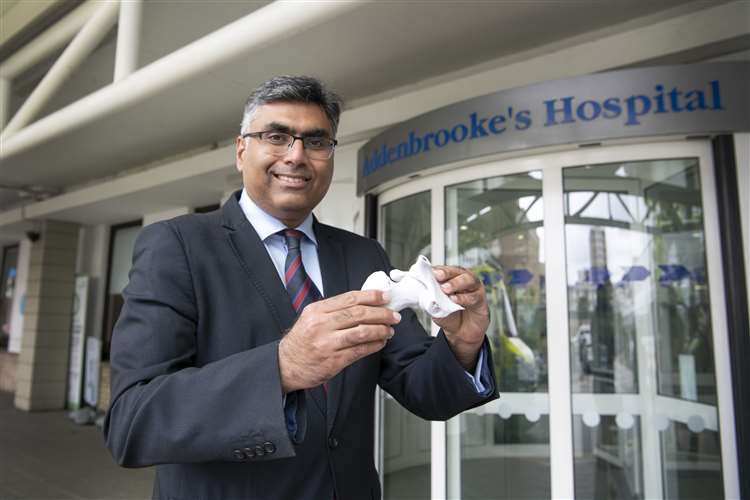
Vikas Khanduja is a Consultant Orthopaedic Surgeon & Research Lead (Elective) at Addenbrooke’s – Cambridge University Hospital, specialising in hip surgery and has a particular interest in arthroscopic surgery of the hip. He has been instrumental in setting up & developing the tertiary referral service for Young Adult Hip Surgery in Cambridge and also leads the Cambridge Young Adult Hip Research Group.


Complementing his clinical practice, his research interests centre around disease stratification of FAI using novel imaging techniques, better pre-operative planning tools using dynamic analysis and optimisation of arthroscopic management of FAI via precision surgery to improve outcomes. He has authored over 150 peer reviewed articles and three books.

 
Vikas is the recipient of the American and British Hip Society Travelling Fellowship in 2011, the Arnott Medal presented by the Royal College of Surgeons of England in 2013, the Insall Fellowship presented by the American Knee Society and Insall Foundation in 2014 and the Hunterian Professorship by the RCS England in 2021.

 
Vikas sits on the Executive Committee of the British Hip Society as the President, ESSKA as the Chair of European Hip Preservation Associates and the NIHR MSK NSG as the Orthopaedic Lead for the Eastern Region. He is the Past Chair of NAHR and the Education Academy in SICOT & a Founder Member of SICOT PIONEER.

Publications

Lorem ipsum dolor sit amet, consectetur adipiscing elit. Ut elit tellus, luctus nec ullamcorper mattis, pulvinar dapibus leo.

PHD Students

Octavian Andronic

Sunil
Kumar

Anuj
Punnose

Hassan
Fawi

Richard
Holleyman

MD Student

MPhil Student

Arman
Memarzadeh

Sonia
Ubong

Service

Young Adult Hip Service


I have had the vision, set-up and developed the Tertiary Young Adult Hip Service in Addenbrooke’s – Cambridge University Hospital for East of England and do support referrals from Northern Ireland as well.

The service, which was non-existent, is now supported by a Specialist Hip Physiotherapist, Surgical Care Practitioner, Sports and Exercise Medicine Trainee and an academic who has an interest in Regenerative Therapies in young adults.

The service serves a population of over 6.3 million (EoE), sees over 350 new patients and performs over 250 operations per year, including injections, hip arthroscopy, open surgical dislocations, and arthroplasty for the young adults.

Governance

The service includes multi-disciplinary meetings and from 2016, we submit our data for national audit to the Non arthroplasty hip registry (NAHR).

Ongoing development includes working closely with other stakeholders, such as commissioning and patient groups.

Research

Despite a busy NHS clinical role, I engage in research significantly and lead the Cambridge Young Adult Hip Research Group. The research group is an active, buoyant, and productive group with a strong national and international presence.

The focus of the research group is on the use of technology for the
assessment and improvement of outcomes in patients having hip preservation surgery. The group currently has 5 PhD students, 1 MD student, 1 MPhil student and a number of medical students doing their SSC engaged in research in this arena. The group has good collaborative links with Cambridge University, Oxford University, Imperial College, McMaster University, Anglia Ruskin University & University of Ghent.


The group has been successful at securing peer-reviewed funding for over £3 million and has delivered on national and pan-European clinical trials. I have published 165 peer reviewed articles on Pubmed, have a h-index of 36, an i10 index of 73 with 3973 citations on Google Scholar.


Innovation

My cross-disciplinary collaboration with Prof. Sohini Kar-Narayan’s group in Material Science at Cambridge led to the invention of a new microfluidic force sensor that addresses a critical unmet need in joint replacement surgery.

We developed the conformable microfluidic force sensors that can be
integrated within current trial liner of the hip replacement and are capable of measuring the large forces passing through the joint during the surgical procedure. This will help optimise implant positioning, thereby minimising failure rates and improving patient outcomes.

The patent for the invention has been filed through Cambridge Enterprise, and the first publication describing the sensor appeared in Cell Reports Physical Sciences, where it was featured as an “Editor’s Choice” for 2021. A follow up paper describing the use of the sensors integrated within the hip implants has recently been published in the Materials and Design journal.

Add Your Heading Text Here

Lorem ipsum dolor sit amet, consectetur adipiscing elit. Ut elit tellus, luctus nec ullamcorper mattis, pulvinar dapibus leo.

Andronic Octavian

Postgraduate Researcher
Born and raised in Republic of Moldova, I then have pursuit my medical studies in Romania where I graduated in 2017 at the University of Medicine and Pharmacy in Iasi. After moving to Switzerland for my orthopaedic surgical training at Balgrist University Hospital in Zurich, I soon began a Ph.D. research degree under the supervision of Mr. Vikas Khanduja in Cambridge, United Kingdom. 
 
I am currently in my final year of orthopaedic training and plan to complete a Fellowship subspecialty training in Primary and Revision Hip and Knee Arthroplasty and Orthopaedic Trauma at the University of Western Australia in Perth under the supervision of Prof Piers Yates in 2023 .
 
I am pursuing my long-term goal of becoming a complete hip surgeon and am blessed to be part of the young adult hip group led by Mr. Vikas Khanduja in Cambridge, a place where the world of hip replacement is continually evolving.
 
100-word Research Summary for Ph.D. at Anglia Ruskin University:
My Ph.D. Thesis aims to investigate effective treatments and management strategies in patients with FAI and concomitant Tönnis Grade 2 or greater hip OA.  
 
We aim to perform a series of studies to elucidate the current evidence of the efficacy of all treatment types for femoroacetabular impingement and concomitant hip degeneration and then elaborate a Delphi Consensus with an international expert panel.

These projects would then constitute the evidence-based design of a subsequent randomized controlled trial that would define guidelines for the gold standard treatment approach in this patient subpopulation.

Top 5 Publications:

  1. Andronic O, Claydon-Mueller LS, Cubberley R, Karczewski D, Sunil-Kumar KH, Khanduja V. Inconclusive and Contradictory Evidence for Outcomes After Hip Arthroscopy in Patients With Femoroacetabular Impingement and Osteoarthritis of Tönnis Grade 2 or Greater: A Systematic Review. Arthroscopy. 2022 Jan 31:S0749-8063(22)00027-5. doi: 10.1016/j.arthro.2022.01.024
  2. Plachel F, Jo OI, Rüttershoff K, Andronic O, Ernstbrunner L. A Systematic Review of Long-term Clinical and Radiological Outcomes of Arthroscopic and Open/Mini-open Rotator Cuff Repairs. Am J Sports Med. 2022 Feb 18:3635465211073332. doi: 10.1177/03635465211073332.
  3. Andronic O, Hincapié CA, Burkhard MD, Loucas R, Loucas M, Ried E, Rahm S, Zingg PO. Lack of Conclusive Evidence of the Benefit of Biologic Augmentation in Core Decompression for Nontraumatic Osteonecrosis of the Femoral Head: A Systematic Review. Arthroscopy. 2021 Dec;37(12):3537-3551.e3. doi: 10.1016/j.arthro.2021.04.062.
  4. Andronic O, Unterfrauner I, Jud L, Fritz B, Viehöfer AF, Fröhlich S, Imhoff FB, Wirth SH. Outcomes of Tibialis Anterior Tendon Reconstruction with Autograft or Allograft. Foot Ankle Int. 2022 Jan;43(1):2-11. doi: 10.1177/10711007211029956. Epub 2021 Jul 26.
  5. Ernstbrunner L, Andronic O, Grubhofer F, Camenzind RS, Wieser K, Gerber C. Long-term results of reverse total shoulder arthroplasty for rotator cuff dysfunction: a systematic review of longitudinal outcomes. J Shoulder Elbow Surg. 2019 Apr;28(4):774-781. doi: 10.1016/j.jse.2018.10.005. 

Sunil Kamar

Postgraduate Researcher
Mr Sunil Kumar is an Orthopaedic Surgeon with a special interest in Young Adult Hip Surgery. He completed his orthopaedic training in the East of England based around Cambridge. 

He is completing a Hip Preservation Fellow at Northumbria prior to taking up a substantive consultant position at Addenbrookes Hospital, Cambridge. 


Mr Sunil Kumar maintains an active academic interest in research and teaching. He is a keen educationalist and a Member of Faculty of Surgical Trainers. His interest in outcomes in young adult hip pathology led him embarking on a journey to establish core outcome set in hip preservation surgery.

Research Summary
 
Project: Core Outcome Measure in Hip Preservation Surgery 
Publishing articles on hip preservation surgery (HPS), made me aware of the usage of patient reported outcome measures (PROMs) in YAH pathologies with no consistency amongst different studies. The project plan consists of (1) Evaluating the different PROMs used in HPS via a systematic review, (2) qualitative interview of patients to get feedback regarding the outcomes relevant to those suffering from non-arthritic hip pain and (3) finally a consensus study amongst expert from around the world via a Delphi process to come to a conclusion of the core outcome set (COS) in HPS, which has the potential to become a standard for future trial in HPS.

Top 5 Publications:

  1. Khanduja V, Darby N, O’Donnell J, Bonin N, Safran MR; International Microinstability Expert Panel. Diagnosing Hip Microinstability: an international consensus study using the Delphi methodology. Knee Surg Sports Traumatol Arthrosc. 2022 Apr 30. doi: 10.1007/s00167-022-06933-4. Epub ahead of print. PMID: 35499620.
  2. Sunil Kumar KH, Garner M, Khanduja V. An evidence-based update on the management of articular cartilage defects in the hip. J Clin Orthop Trauma. 2022 Mar 17;28:101830. doi: 10.1016/j.jcot.2022.101830. PMID: 35371918; PMCID: PMC8968056.
  3. Vemulapalli KV, Sunil Kumar KH, Khanduja V. Registry Studies Use Inconsistent Methods to Account for Patients Lost to Follow-up, and Rates of Patients LTFU Are High. Arthrosc Sports Med Rehabil. 2021 Oct 28;3(6):e1607-e1619. doi: 10.1016/j.asmr.2021.07.016. PMID: 34977612; PMCID: PMC8689216.
  4. Yarwood W, Sunil Kumar KH, Ng KCG, Khanduja V. Biomechanics of Cam Femoroacetabular Impingement: A Systematic Review. Arthroscopy. 2022 Jan;38(1):174-189. doi: 10.1016/j.arthro.2021.05.066. Epub 2021 Jun 18. PMID: 34147642.
  5. Sunil Kumar KH, Mamarelis G, Pettit M, Khanduja V. Management of Stiffness following Total Knee Arthroplasty: International Survey on Surgeon Preferences. SICOT J. 2021;7:30. doi: 10.1051/sicotj/2021008. Epub 2021 Apr 30. PMID: 33929314; PMCID: PMC8086424.

Anuj Punnoose

Postgraduate Researcher

PROFILE:

More than 24 years of experience as a Physiotherapist. Led the Trauma and Orthopaedic inpatient Physiotherapy team based at Cambridge University Hospitals for 16 years. East of England regional Physiotherapy specialist for Young Adult Hip Disorders.

Extensive experience in Trauma and Orthopaedics and Musculoskeletal rehabilitation.

Highly skilled clinician and leader with an excellent clinical and academic track record.

Areas of interests are Hip and groin disorders in the young adult population, joint replacement surgeries and pelvic and lower Limb trauma.

Recipient of the NIHR funded Integrated Clinical Academic Doctoral Fellowship award, April 2022. 

RESEARCH PROJECT:

Title: Prehabilitation for patients undergoing hip arthroscopic surgery for Femoroacetabular Impingement syndrome- a feasibility study

Femoroacetabular impingement syndrome (FAIS), resulting from abnormal acetabular or femoral head/neck morphology is a well-known pathological entity found in young active adults. Patients with FAIS often have pain, stiffness and functional limitations. Hip arthroscopy is often recommended when conservative management has failed to address the symptoms. However, the road to recovery is often lengthy due to a multitude of factors. This study will evaluate the feasibility, suitability and acceptability of a novel prehabilitation programme within an NHS setting and inform the design of a future large-scale trial testing the effectiveness of prehabilitation in patients undergoing hip arthroscopy.

Recent Publications:

Metcalfe A, Parsons H, Parsons N, et al.(2022): Subacromial balloon spacer for irreparable rotator cuff tears of the shoulder (START:REACTS): a group-sequential, double-blind, multicentre randomised controlled trial. Lancet 2022;399(10339):1954-1963. doi: 10.1016/S0140-6736(22)00652-3.

Y Kuroda, M Young, H Shoman, A Punnoose, A R Norrish, V Khanduja (2020): Advanced rehabilitation technology in orthopaedics-a narrative review. Int Orthop 2021;45(8):1933-1940. doi: 10.1007/s00264-020-04814-4.DOI: 10.1007/s00264-020-04814-4

Punnoose, Anuj; Weiss, Ori; Khanduja, Vikas; Rushton, Alison (2019): The effectiveness of Prehabilitation in Patients undergoing Orthopaedic Surgery- A systematic review and meta-analysis. BMJ Open 2019;9:e031119. Doi: 10.1136/bmjopen-2019-031119

Anuj Punnoose; Alan Norrish; Katie Pak (2016): Extracorporeal Shock Wave Therapy for Achilles and Patellar Tendinopathy: Meta-Analysis and a Systematic Review of the Literature. Journal of Physiotherapy and Physical Rehabilitation, Feb 2016                                                     DOI: https://doi.org/10.4172/2573-0312.1000124

A Punnoose; C Gallagher; J Matthews; V Khanduja (2015): Rehabilitation of a National Taekwondo Player Following Arthroscopic Hip Surgery: Successfully Achieving a Return to Gold Medal Winning Performance Levels’. Journal of Novel Physiotherapies, Apr 2015.         DOI: https://doi.org/10.4172/2165-7025.1000262

Richard Holleyman

MBBS, MSc, FRCS (Tr&Orth)
Specialty Trainee in Trauma & Orthopaedic Surgery, Health Education North-East, Newcastle upon Tyne, UK.
British Hip Society and Orthopaedic Research UK Research Fellow.
 
Richard is a registrar in Trauma & Orthopaedic surgery based in the North-East, and is currently undertaking a PhD studying outcomes following hip surgery using national datasets. Richard is privileged to have been awarded research fellowships from the Royal College of Surgeons of England (Shears Fellowship), Orthopaedic Research UK, the British Hip Society, and the National Hip Fracture Database (honorary) in support of his work.
 
He has a passion for epidemiological research and informatics, having worked extensively with large national datasets including the Non-Arthroplasty Hip Registry (NAHR, where he has helped produce the annual report since 2017), National Joint Registry (NJR), National Hip Fracture Database (NHFD), and Hospital Episode Statistics (HES). Over the last decade, Richard has developed particular expertise in the linkage and modelling of complex local and population level data for research, health surveillance, and quality improvement and has worked with, and consulted for, a number of public and private organisations.
 
Richard’s PhD encompasses analysis of outcomes following young adult hip surgery (using NAHR data), hip fracture surgery (using NHFD data) and now, as part of a recently awarded fellowship co-funded by the British Hip Society and Orthopaedic Research UK, 
he is working with the research committee to examine the outcomes following complex hip arthroplasty (particularly revision/re-do surgery) and their determinants using linked data from the NJR and NHS Digital (Hospital Episode Statistics).
Richard’s publications are available here

Arman Memarzadeh

MBBS, FRCS (Tr and Orth), PGCME

Arman is a consultant in trauma and orthopaedics at Cambridge University Hospitals. Having completed his higher surgical training on the Cambridge rotation, he completed further fellowship training at the Fortius clinic in London, Leeds, and Oxford University Hospitals. He was also awarded a BOA travelling fellowship to visit Chicago and Philadelphia (Rothman Institute).

His clinical specialist interest is in knee surgery, sports and arthroplasty. Arman has been awarded a number of prizes, including the Trinity Cup, Cambridge Trainee of the Year and a research grant from Addenbrooke’s Charitable Trust. 

 
Arman has three children and enjoys watching, and sometimes playing, a variety of sports.
MD Summary
 
Arman took one year out of his surgical training program to start an MD research project, investigating the effect of pre-operative muscle strength on the outcomes of hip arthroscopy. The first part of the project was to validate a strength measurement protocol using an isokinetic dynamometer, according to the ‘Cambridge Protocol’. This showed high inter- and intra-observer correlation for the protocol, and was published in 2022. 
 
The second part of the project will correlate pre-operative strength with post-op outcomes; it has received ethical approval and is due to be completed by the end of 2022.

He has published over 20 articles in peer reviewed journals, with work presented at international conferences.

Top Publications:

  1. Validating the Cambridge Protocol: Reliability of Hip Muscle Strength Measurements Using a Motorized Dynamometer and Electromyography
    Memarzadeh A, Morrison AP, Merzbach V, Ferrandino M, Arora A, Claydon-Mueller LS, Khanduja V. Sports Health (2022) DOI: 10.1177/19417381211056869
  2. Infographic: Measuring hip muscle strength in patients with femoroacetabular impingement and other hip pathologies
    Mayne E, Raut P, Memarzadeh A, Arora A, Khanduja V. British Journal of Research (2019);
    DOI 10.1302/2046-3758.86.BJR-2019-0113
  3. Measuring hip muscle strength in patients with femoroacetabular impingement and other hip pathologies: a systematic review
    Mayne E, Memarzadeh A, Raut A, Arora A, Khanduja V. Bone Joint Res (2017) 5:1–7.
    DOI: 10.1302/2046-3758.512
  4. Standardising muscle strength measurement protocols in femoroacetabular impingement: RE: Impaired hip muscle strength in patients with femoroacetabular impingement syndrome.
    Letter to editor
    J Sci Med Sport. 2018 Feb;21(2):110. doi: 10.1016/j.jsams.2017.07.016. Epub July 2017

Sonia Ubong

MPHIL STUDENT

Sonia E. Ubong is currently undertaking her Master’s in Medical Sciences (Surgery) in the Division of Trauma and Orthopaedic surgery, at the University of Cambridge.

Her research is focused on investigating the relationship between Cam-type Femoroacetuabular Impingement and patients with Axial Spondylarthritis and Psoriatic Arthropathy.

Sonia was drawn to a career in Trauma and Orthopaedic surgery due to the variety in the demographic of patients and the practical nature of the speciality. Inspired by experiences as a medical student at King’s College London, Sonia recognised that although technical excellence and clinical judgment are imperative for all surgeons, a commitment to the study of fundamental pathology is essential for advancing the field of Orthopaedic Surgery. It is through this understanding that Sonia is now working on several projects at the Young Adult Hip Research group under Mr Vikas Khanduja’s guidance.


Sport has been a strong feature of Sonia’s career. She earned her Cambridge Blue in the 2022 Rugby Varsity match at Twickenham. Her keen interest in sport has ultimately led to her growing interest in orthopaedic pathologies that affect young adults.

Students being able to explore their interests in Orthopaedic surgery is extremely important to Sonia. As such, she currently sits on the British Orthopaedic Medical Society Association (BOMSA) collaborating with medical schools to enhance the student experience and exposure to Orthopaedic surgery.

Richard Holleyman
MBBS, MSc, FRCS (Tr&Orth)

Specialty Trainee in Trauma & Orthopaedic Surgery, Health Education North-East, Newcastle upon Tyne, UK.
British Hip Society and Orthopaedic Research UK Research Fellow.
 
Richard is a registrar in Trauma & Orthopaedic surgery based in the North-East, and is currently undertaking a PhD studying outcomes following hip surgery using national datasets. Richard is privileged to have been awarded research fellowships from the Royal College of Surgeons of England (Shears Fellowship), Orthopaedic Research UK, the British Hip Society, and the National Hip Fracture Database (honorary) in support of his work.
 
He has a passion for epidemiological research and informatics, having worked extensively with large national datasets including the Non-Arthroplasty Hip Registry (NAHR, where he has helped produce the annual report since 2017), National Joint Registry (NJR), National Hip Fracture Database (NHFD), and Hospital Episode Statistics (HES). Over the last decade, Richard has developed particular expertise in the linkage and modelling of complex local and population level data for research, health surveillance, and quality improvement and has worked with, and consulted for, a number of public and private organisations.
 
Richard’s PhD encompasses analysis of outcomes following young adult hip surgery (using NAHR data), hip fracture surgery (using NHFD data) and now, as part of a recently awarded fellowship co-funded by the British Hip Society and Orthopaedic Research UK, he is working with the research committee to examine the outcomes following complex hip arthroplasty (particularly revision/re-do surgery) and their determinants using linked data from the NJR and NHS Digital (Hospital Episode Statistics).

Richard’s publications are available here